

A seafoam crochet pinafore with a sweet cat-face bib, little shoulder bows, and fish appliques makes a playful handmade outfit for a toddler. This image-inspired design pairs a simple sleeveless dress with a cream long-sleeve shirt, so it can be styled across seasons.
The reference photo shows the finished look, but it does not provide the original yarn label, hook size, stitch sequence, gauge, size chart, or row counts. To keep the instructions honest, this page is a construction guide rather than a counted, ready-to-crochet pattern. Use it to plan your own pinafore, take measurements from the intended wearer, and swatch before you begin.
Why You’ll Love This Dress
- A clear focal point: The round cat applique gives a straightforward bib a friendly, recognizable character.
- Room for personalization: Change the colors, face expression, bow placement, or skirt length to suit the child.
- Layer-friendly styling: A pinafore can be worn over a simple shirt, bodysuit, or lightweight top.
- Useful crochet practice: The design invites you to work flat fabric, attach straps, add fullness, and sew on small motifs.
- A thoughtful handmade gift: A custom fit and carefully finished seams make the garment feel personal.
Skill Level
This is best approached as an advanced beginner to intermediate crochet project. The main fabric can be kept simple, but fit planning, even edges, a gathered skirt, strap placement, and appliques call for steady finishing skills. You should be comfortable making a gauge swatch, counting rows, sewing crochet pieces together, and weaving in ends.
Finished Measurements
No finished measurements are visible in the reference image, so there are no reliable size numbers to copy. Before starting, measure the intended wearer over the layers the pinafore will be worn with:
- Chest circumference and the amount of wearing ease you prefer.
- Bib width and height, from the top edge to the waist.
- Shoulder-to-waist distance and the strap length needed to reach the front buttons or loops.
- Desired skirt length, measured from the waist to the hem.
- Skirt circumference and the fullness you want.
- Neckline, armhole, and back-opening clearance for comfortable dressing.
Record these measurements on paper and compare them with a blocked swatch. Children grow quickly, so allow comfortable movement without making straps or openings loose enough to snag.
Materials
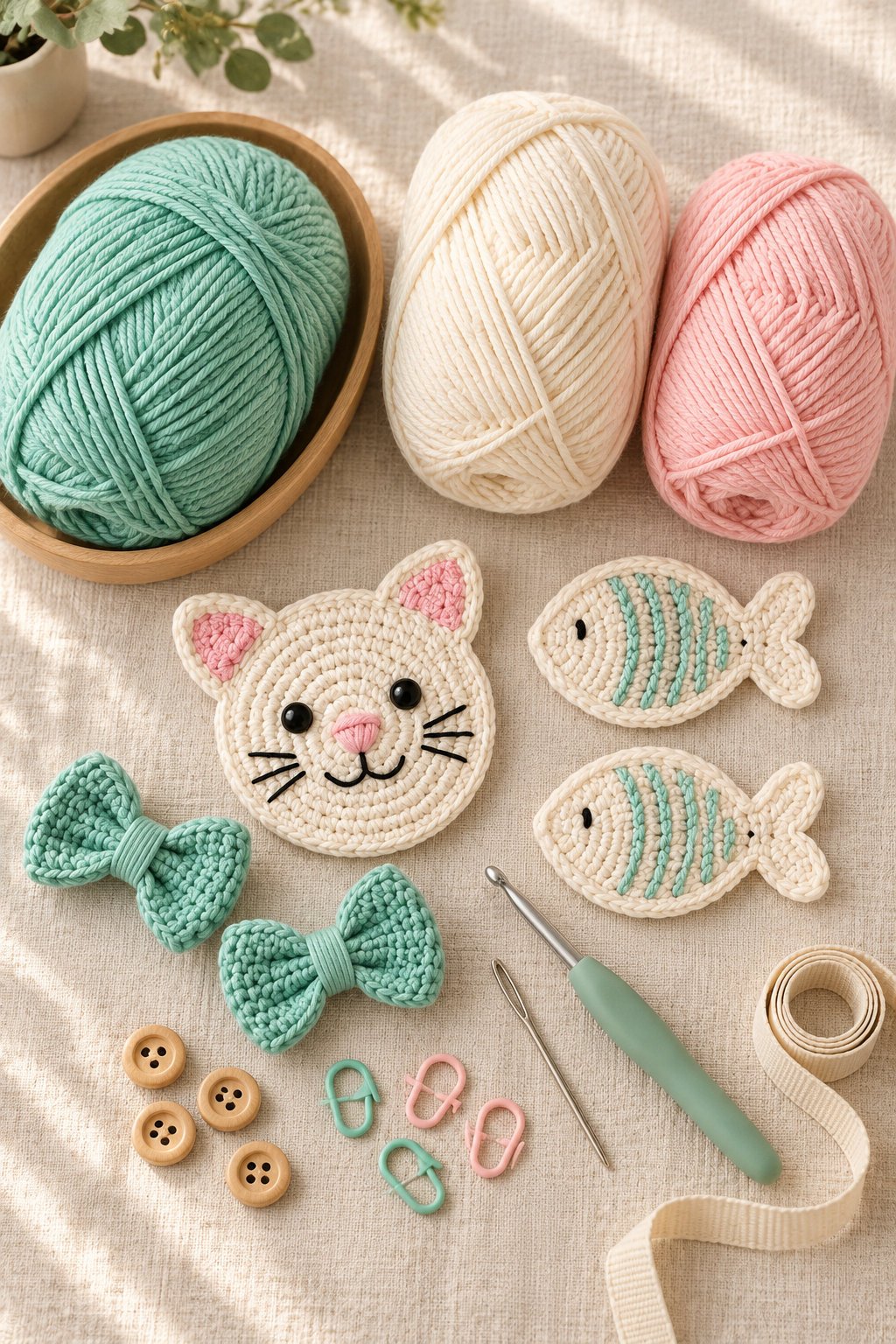
- Smooth, washable yarn in seafoam or mint for the dress.
- Cream yarn for the cat face and fish motifs.
- Small amounts of blush pink for the cat’s ears and nose.
- A little dark yarn for embroidered eyes, mouth, and whiskers.
- Crochet hook that gives the fabric the drape and density you want.
- Tapestry needle, scissors, measuring tape, and stitch markers.
- Optional small buttons or another secure strap closure. For a young child, avoid detachable decorative pieces and inspect closures often.
Yarn Recommendations
For a similar look, choose a smooth cotton or cotton-blend yarn that is soft against skin, holds its shape, and can be laundered easily. A light-weight CYC #3 yarn is a reasonable starting point for a delicate pinafore; a slightly heavier yarn will make a firmer, warmer dress. The photo cannot confirm the original yarn weight or fiber, so treat this as a design suggestion rather than a pattern specification.
Use yarns of similar thickness for the dress and appliques so the motifs sit flat instead of pulling or bulging. Check dye lots before buying, and make a small color swatch if you are combining mint, cream, and pink.
Hook Size
The original hook size is unknown. Start with the hook recommended on your yarn label, then make a swatch in the stitch you plan to use. If the fabric is stiff, try a larger hook; if it is loose or droops, try a smaller hook. Choose based on the fabric’s feel and the fit of your swatch, not on the photograph alone.
Gauge
No numeric gauge is supplied or measurable from the image. Gauge matters for a wearable garment: a small difference in stitch size can change the bib width and skirt circumference. Wash and dry your swatch the way you plan to care for the finished dress, then measure it and use that result to plan the project around the child’s measurements.
Crochet Abbreviations
The following abbreviations use US crochet terms and are useful for a simple compact-stitch interpretation of the design. The reference does not identify the exact stitches used in the pictured dress.
- ch — chain
- sc — single crochet
- sl st — slip stitch
- st(s) — stitch(es)
- inc — increase; work more than one stitch in a stitch or space as directed by your chosen stitch pattern
- dec — decrease; combine stitches as directed by your chosen stitch pattern
Construction Overview
A practical interpretation is to make a straight bib, two shoulder straps, and a fuller skirt, then join the pieces and add the decorations. The photo suggests a square bib, buttoned straps, a gathered skirt, a central cat face, and two fish motifs. It does not show the back of the dress or prove whether the original skirt is worked flat, in joined rounds, or attached with a seam. Choose a closure and construction method that fit your measurements and comfort needs before crocheting.
For the flexible guide below, work the bib and skirt as separate pieces, join the skirt to the lower edge of the bib, and attach the straps at the back. This is one workable approach, not a reconstruction of hidden stitch instructions.
Step-by-Step Design Guidance
- Make a swatch and plan the fit. Use the yarn and stitch you intend for the dress. Wash and dry the swatch, then use it to estimate how much fabric you need for the bib, straps, and skirt. Write down the wearer’s measurements and decide where the waist and hem should sit.
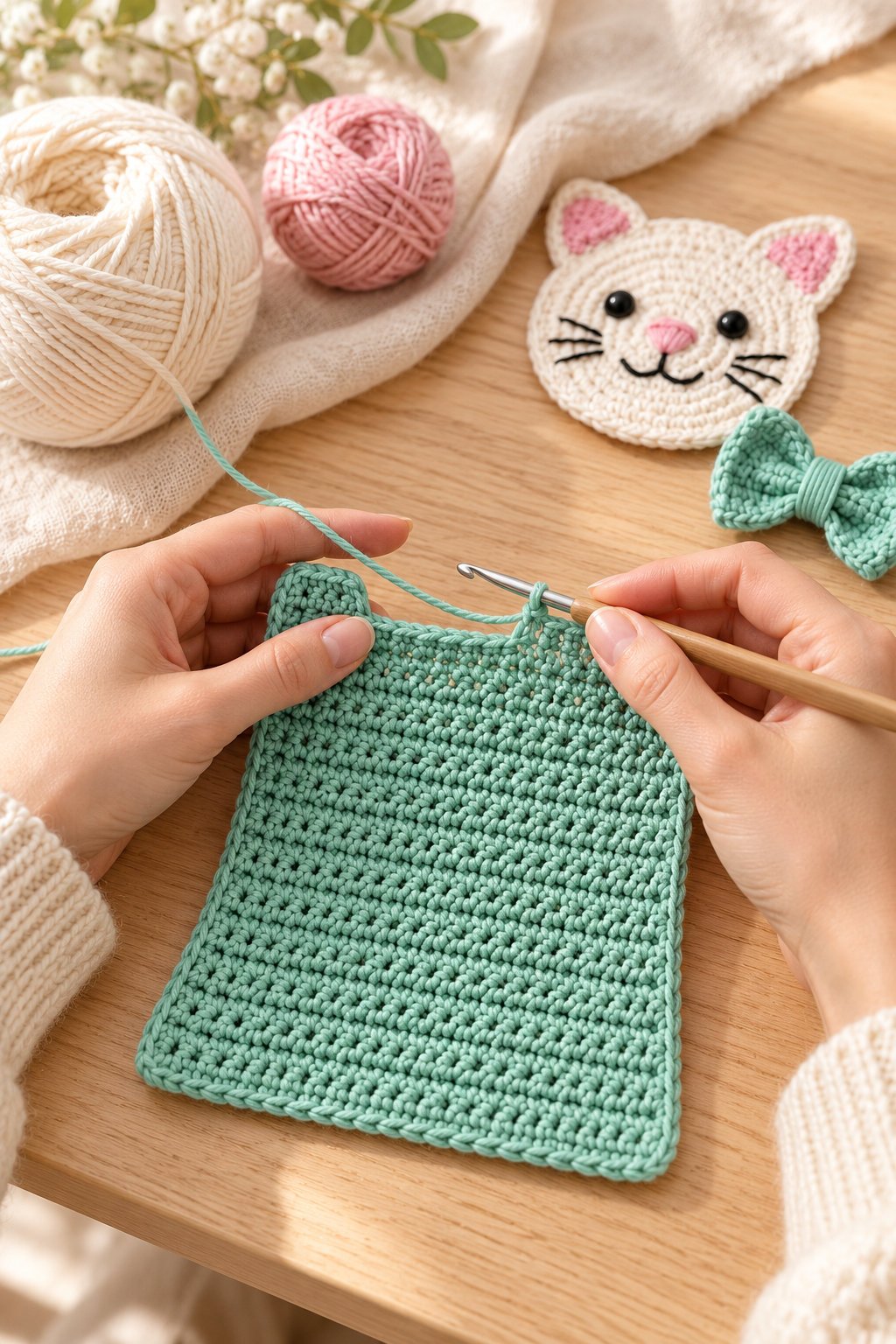
- Crochet the bib. Work a flat rectangle in a compact stitch such as single crochet, keeping both sides even. Stop when the panel matches your planned width and height. Check the fit over a shirt as you go; the top should sit comfortably across the chest without crowding the neckline or underarms.
- Make and attach the straps. Crochet two narrow, sturdy strips long enough to travel from the back of the bib over the shoulders to the front. Securely sew the back ends to the top edge of the back panel. At the front, use a closure that is secure and appropriate for the child’s age. The reference shows small buttons, but embroidered or securely sewn alternatives may be safer for very young children.
- Create the skirt. Crochet a wide rectangle or a tube, depending on the closure you have planned. For a gathered look, make the upper edge wider than the bib’s lower edge, then gather it evenly until it fits. Add fullness gradually and check that the skirt hangs smoothly rather than forming bulky pleats in just one area.
- Join skirt and bib. Pin the skirt to the lower edge of the bib, distributing the gathers evenly. Sew the seam with matching yarn and check that it feels comfortable from the inside. If your design has a back opening, finish its edges neatly and add a secure closure before wearing.
- Shape the cat applique. Make a flat cream circle or oval for the face and two small ear shapes. Add blush inner ears and nose, then embroider the eyes, mouth, and whiskers with yarn. Pin the face in the center of the bib and sew around the entire edge, keeping the back smooth and the stitches secure.
- Add the fish motifs and bows. Make two small cream fish shapes and place them symmetrically on the lower skirt. Sew each motif around its outline and secure any embroidered details. Crochet two mint bows and attach them near the strap tops if desired. For baby and toddler garments, embroider details and avoid loose beads or detachable embellishments.
- Finish and try on. Weave in ends on the inside, check every seam and closure, and try the pinafore over the intended base layer. Confirm the straps stay in place, the armholes allow movement, and the skirt clears the child’s stride.
Cat and Fish Applique Details
The applique is what makes this design read as a kitty pinafore. Keep the face light enough to stand out against the mint bib, and use a small amount of blush pink to bring out the ears and nose. Embroidered facial features create a softer surface and remove the risk of hard pieces coming loose. Position the fish motifs with enough space between them so the skirt still drapes naturally.

Customization Ideas
- Replace mint with dusty blue, lilac, pale yellow, or a favorite solid color.
- Use a plain skirt for a simpler look, or add a narrow contrast border at the hem.
- Change the applique to a different animal while keeping the same bib-and-skirt silhouette.
- Make the skirt shorter or longer by adjusting it to the wearer’s measurements.
- Use one larger fish, several small fish, or embroidered waves instead of the pictured pair.
- Skip the bows for a more understated pinafore, or make them removable only if they can be secured safely and are age-appropriate.
Finishing
Lay the garment flat and shape it to the measurements you recorded. Follow the yarn label’s care guidance when blocking, and avoid stretching the straps or bib. Weave in ends in more than one direction so they do not work loose with wear. Check the wrong side for scratchy knots, bulky seams, or long floats of yarn that could catch fingers.
Before the first wear, inspect every applique edge, strap attachment, button, and closure. Tug gently on each sewn detail. Re-secure anything that shifts, and repeat these checks after laundering.
Care Instructions
Follow the yarn label first. Washable cotton blends can often be gently hand-washed or placed in a mesh bag on a delicate cycle, but fibers and dyes vary. Use cool water and mild detergent, reshape the pinafore while damp, and dry it flat away from direct heat. Avoid hanging a wet crochet dress by its straps, since the weight of the water can stretch them.
Helpful Tips and Troubleshooting
- The bib curls: Check your tension and hook size, and block the swatch before deciding whether to change either.
- The skirt seam puckers: Remove a few stitches and redistribute the gathers instead of forcing excess fabric into one spot.
- The dress feels heavy: Choose a lighter yarn or reduce skirt fullness; dense stitches and a wide skirt add weight.
- The straps slide: Recheck their length and placement over the intended shirt, then reinforce the back attachment.
- The appliques ripple: Use a flatter motif, sew it down with even tension, and avoid pulling the thread tight.
- The colors bleed: Test a small swatch before washing the finished garment, especially when using dark or saturated yarn.
Frequently Asked Questions
Is this a complete row-by-row crochet pattern?
No. The reference photo does not contain the stitch counts, gauge, measurements, or construction details needed for a verified counted pattern. This page offers an original visual design guide and fitting workflow; use a separate tested pinafore pattern if you need exact instructions.
What size does the pictured dress fit?
The image does not identify a size. Measure the child and compare the planned garment with a washed swatch before deciding on the bib, straps, and skirt dimensions.
What yarn should I use?
A soft, washable cotton or cotton blend is a practical choice. Light-weight CYC #3 yarn is a reasonable starting suggestion for a similar look, but the pictured yarn cannot be confirmed from the photo.
Can I make the dress without buttons?
Yes. Plan a secure strap closure that suits the child and the design. For very young children, skip small detachable decorations and use embroidered details; check all closures and seams regularly.
How can I make the outfit safer for a baby or toddler?
Use embroidered eyes and facial details rather than plastic pieces, sew appliques firmly all the way around, and avoid beads or small loose decorations. Buttons can be a choking hazard if they come off, so consider a secure alternative and inspect the garment before every wear. Keep the child supervised while wearing handmade clothing.
Final Thoughts
A kitty cat pinafore is a charming way to combine a simple crocheted dress shape with personalized applique work. Use the seafoam, cream, and blush palette as inspiration, then rely on your own measurements and swatches to get a comfortable fit. The photo can guide the look; careful fitting and secure finishing make the handmade garment practical to wear.


