

A black lace granny square mini dress brings floral crochet motifs and a fitted, modern silhouette together. In the reference image, open black squares create a dress-length lace fabric, narrow straps frame a square neckline, and a teal layer shows through the motifs. This original guide explains how to plan a similar look from the visual details without guessing the stitch counts, gauge, or size hidden from a photograph.
The linked Made With Sally page contains its own counted pattern. This YarnHook article is an independent construction overview; follow the source page for that pattern’s exact instructions and specifications.
Why You’ll Love This Granny Square Dress
- Floral motifs make the lace feel special. The repeated flower-centered squares give the black fabric a decorative look from a distance and close up.
- Modular pieces are easier to plan. Motifs can be blocked and arranged before you join them into garment panels.
- The dark lace is versatile. A slip, lining, or other underlayer can change the color and coverage beneath the openwork.
- The silhouette is easy to personalize. Strap width, neckline coverage, skirt length, and the amount of flare can all be planned around your measurements.
- It uses familiar garment skills. Motif making, joining, edging, and fitting are useful techniques for many crochet clothes.
Skill Level
Suggested level: Intermediate. A fitted lace dress asks you to make consistent motifs, join them neatly, plan garment proportions, and check fit as the fabric comes together. The difficulty depends on the motif stitch pattern you choose. If this is your first crochet garment, practice the motif and joining method on a smaller swatch before planning the full dress.
Useful skills include crocheting in the round, changing rounds, working chain spaces, joining motifs, blocking, weaving in ends, and adjusting a garment to body measurements. The image does not reveal the exact stitches used.
Finished Measurements
The photo does not provide reliable measurements or a size range. Measure over the undergarments or slip you expect to wear with the dress:
- Bust and underbust
- Natural waist
- Full hip
- Shoulder-to-waist length
- Waist-to-desired-hem length
- Strap length and spacing
- Desired neckline depth and back coverage
Lay out a few blocked motifs to estimate how their width and height relate to your body measurements. Plan for the openwork fabric to behave differently from a solid fabric: motif joins, fiber, and blocking can all affect stretch and drape. Try on a paper or fabric layout, or pin a sample panel to a dress form, before committing to the full skirt.
Materials
- Fine black yarn or crochet thread suitable for a lace garment
- Optional accent-colored underlayer or lining fabric
- Crochet hook selected by swatching
- Flexible measuring tape
- Stitch markers
- Rust-proof blocking pins and a blocking surface
- Yarn needle
- Removable markers or clips for arranging motifs
- Optional sewing needle and thread if you plan to attach a fabric lining

Yarn Recommendations
A smooth cotton or mercerized cotton is a useful starting point for crisp floral motifs and a lightweight warm-weather garment. Fine crochet thread or a fingering-weight yarn may suit the open lace appearance, but choose the fiber and weight by swatching rather than by the photograph. The image cannot confirm the original yarn, fiber content, or weight.
Dark yarn can make stitch definition harder to see. Work in bright, even light, use a smooth yarn with clear twist, and check that you can comfortably count the stitches in your chosen motif. If you substitute yarn, rework the swatch and motif layout: changing the yarn changes the square size, skirt circumference, and amount of drape. Estimate yardage only after settling on your garment size, motif, and length.
Hook Size
No hook size is visible in the reference. Begin with the yarn label’s suggested hook, then make and block a motif in your chosen stitch pattern. Adjust the hook until the square lies flat and the fabric has the openness and drape you want. Use the same hook consistently for the motifs unless a separate swatch shows that another size works better for an edging or strap.
Gauge
Gauge matters because the dress is built from joined motifs. The photograph does not establish a gauge or even the exact motif pattern, so there is no reliable stitch count to publish here. Make several motifs, block them as planned, and measure each square after it dries. Use those dimensions to map the panels to your bust, waist, hip, and desired length.
Also make a joining sample. The seam or join adds fabric between squares and can change the finished width. Recheck the fabric after washing, especially if you choose cotton, which may relax under its own weight.
Crochet Abbreviations
These are standard US crochet terms. Use only the abbreviations that appear in the motif instructions you select.
- ch: chain
- sl st: slip stitch
- sc: single crochet
- hdc: half double crochet
- dc: double crochet
- tr: treble crochet
- st(s): stitch(es)
- sp(s): space(s)
- ch-sp: chain space
- rep: repeat
- RS: right side
- WS: wrong side
- inc: increase, as defined by the chosen pattern
- dec: decrease, as defined by the chosen pattern
Construction Overview
The image shows a short dress made from dark, openwork square motifs with flower-like centers. The squares form a fitted upper area and a skirt that angles outward slightly toward the hem. Narrow straps connect to the bodice, and the neckline appears fairly straight across the front. A teal underlayer is visible through the black lace. The back construction and exact panel arrangement are not visible in the photograph.
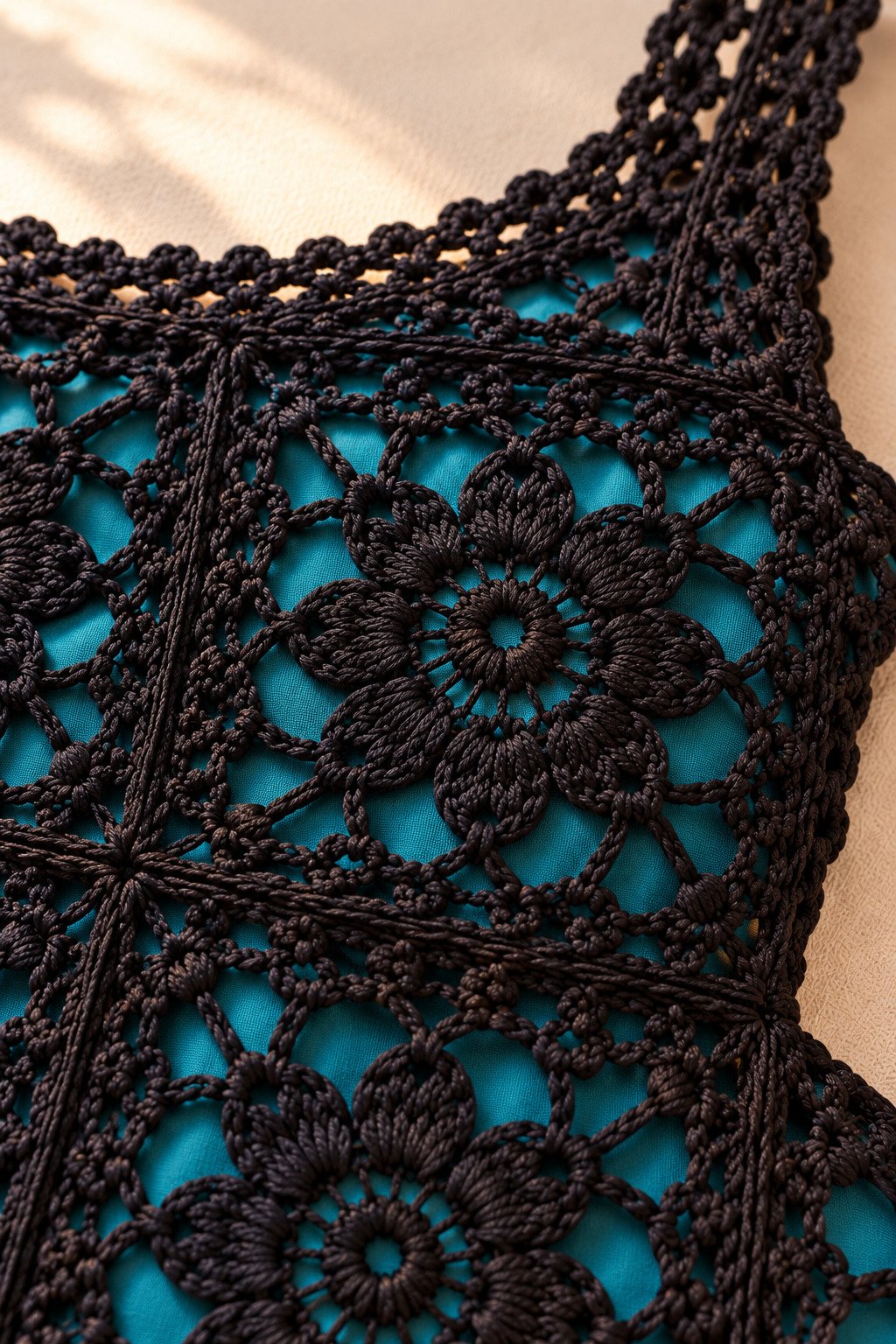
For a similar look, plan the dress as a set of blocked motif panels with a fitted top edge, a comfortable waist and hip, and enough width for the skirt to move. Make and arrange motifs first, then decide how to join the panels and where to place seams. Add straps and edging after checking the fit. A separate slip or lining can provide coverage without hiding the lace texture.
Step-by-Step Planning for a Similar Silhouette
This is a visual construction guide, not a counted, graded pattern. It does not supply a specific motif, square count, gauge, or row-by-row directions; those details cannot be confirmed from the image.
1. Choose a motif and test it
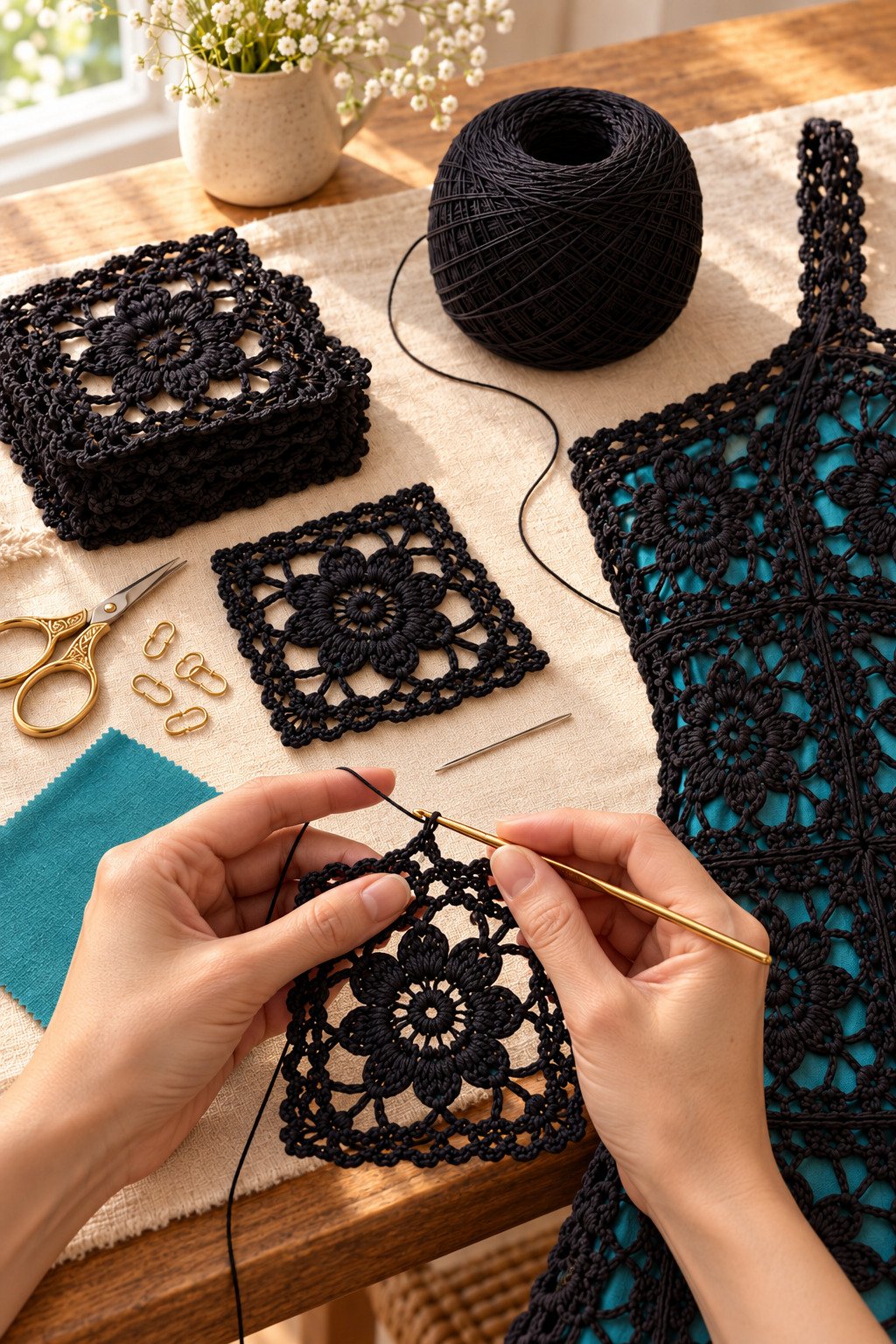
Select a floral square motif with an open background that you can repeat consistently. Work several samples in your chosen black yarn. Block them, then check that the center lies flat, the corners are even, and the open spaces feel suitable for a garment. Make a joining sample so you know how much width the seams add.
2. Map the dress proportions
Use your measurements to sketch the front, back, and side areas. Place the blocked squares on a flat surface in a layout that follows the shape you want: close through the bodice, comfortable at the hip, and slightly wider toward the hem if desired. The photograph suggests the skirt is made from repeated squares, but it does not reveal their exact arrangement or total number.
3. Build and block the panels
Make enough motifs for the layout you planned, checking their dimensions as you go. Block them evenly before joining; consistent square size makes it easier to keep the neckline, waist, and hem aligned. Arrange the squares with the right sides facing the same direction and the flower centers oriented consistently.
4. Join the lace fabric
Join the squares using a method suited to the motif and the amount of texture you want at the seams. A flat join can keep the surface smooth; a more visible join can become part of the design. Work the front and back panels or another planned layout, then connect the side seams. Leave room for the neckline and arm openings, and keep the open back or closure design in mind as you position motifs.
5. Check the fit before finishing the top
Pin or baste the panels together and try them over the intended underlayer. Check bust coverage, waist ease, hip movement, neckline height, and hem length while standing and sitting. Adjust the motif layout before adding permanent finishing. If the fabric needs shaping beyond what the square layout provides, use a simple coordinating lace or solid crochet section where it will be comfortable.
6. Add straps and edges
Make straps wide and secure enough for the garment’s weight. Position them so the neckline lies flat and the dress stays in place. Add a neat edge around the neckline, arm openings, and hem, testing the edging on a swatch first so it does not pull the lace inward. Reinforce each strap attachment on the inside.
7. Plan the underlayer
The reference shows a teal layer beneath the black lace. Try the dress with a slip or lining in the color and coverage you want. A separate slip is removable and allows the lace dress to remain versatile. If sewing in a lining, baste it first and make sure it does not restrict the stretch or movement of the crochet layer.
Customization Ideas
- Change the underlayer color to make the black motifs stand out differently.
- Adjust the hem length after trying on the assembled panels.
- Add a little flare by changing the panel layout gradually toward the hem.
- Use wider straps for more coverage, or add a coordinating band along the neckline.
- Choose a separate slip for flexible coverage and easier garment care.
- Make a top or tunic from the same motif layout by shortening the lower panels.
- Add a modesty panel or fabric lining behind the bodice while leaving more of the skirt open.
Finishing
Block the joined dress gently according to the yarn label. Support the weight of the garment so wet lace does not stretch out of shape. Weave in ends along nearby stitches without making bulky ridges, then inspect every join and strap attachment. Secure any loose corners and try the dress on once more after it is fully dry. If adding a lining, finish its edges separately so they do not snag the crochet lace.
Care Instructions
Follow the care directions for your chosen yarn and lining. Dark cotton can release excess dye, so test a small swatch in cool water before washing the finished dress. Hand wash gently when the yarn label allows, avoid wringing, and support the garment while wet. Dry flat in shape and store folded rather than hanging if the lace feels heavy. Remove a separate slip before washing the crochet dress unless both pieces share compatible care instructions.
Helpful Tips
- Keep a blocked motif nearby as a size reference while you work.
- Count motifs by panel and mark their orientation before assembly.
- Make a joining sample before committing to the full seam method.
- Check fit with the intended slip or lining; the extra layer changes how the dress feels.
- Use bright lighting or a light surface beneath dark yarn while crocheting.
- Reinforce straps and high-tension seams with a second pass if needed.
- Let the garment’s washed and blocked fabric determine the final fit, not an unverified photo measurement.
Frequently Asked Questions
Is this a complete counted crochet pattern?
No. This YarnHook article is an original visual design guide, not the source page’s full counted pattern. The photograph does not provide the exact motif instructions, stitch counts, gauge, or size range. See the original Black Lace Granny Square Mini Dress pattern for that page’s specific instructions.
What stitch is used in the floral squares?
The photograph shows flower-centered openwork squares, but it is not detailed enough to identify every stitch with confidence. Choose a motif pattern you can repeat consistently and use its written stitch definitions.
What yarn should I choose for a black lace dress?
A smooth fine cotton or mercerized cotton is a practical starting point for defined lace motifs. Swatch in the actual yarn and block it before planning the garment; fiber, hook, and motif choice all affect the finished size.
Do I need to line the dress?
The openwork leaves much of the underlayer visible. A separate slip or a carefully fitted lining can provide the coverage you want. Try the complete combination on before finalizing straps and length.
How can I make the dress fit my measurements?
Measure your bust, waist, hip, and desired length, then use blocked square dimensions and your joining sample to plan the panels. Baste the panels and try them on before finishing the neckline and hem.
Can I make this design as a top instead?
Yes. Use the same motif and panel-planning approach, but stop the lower panels at your preferred top length and finish the hem securely.
Final Thoughts
A black floral granny square mini dress pairs the handmade texture of lace motifs with a clean, fitted silhouette. The most important planning work happens before the final join: swatch and block the motif, map the panels to your measurements, and try the dress over the underlayer you intend to wear. Use the linked source for its exact counted pattern, and use this guide to think through the design and fit of a similar garment.


