
Introduction
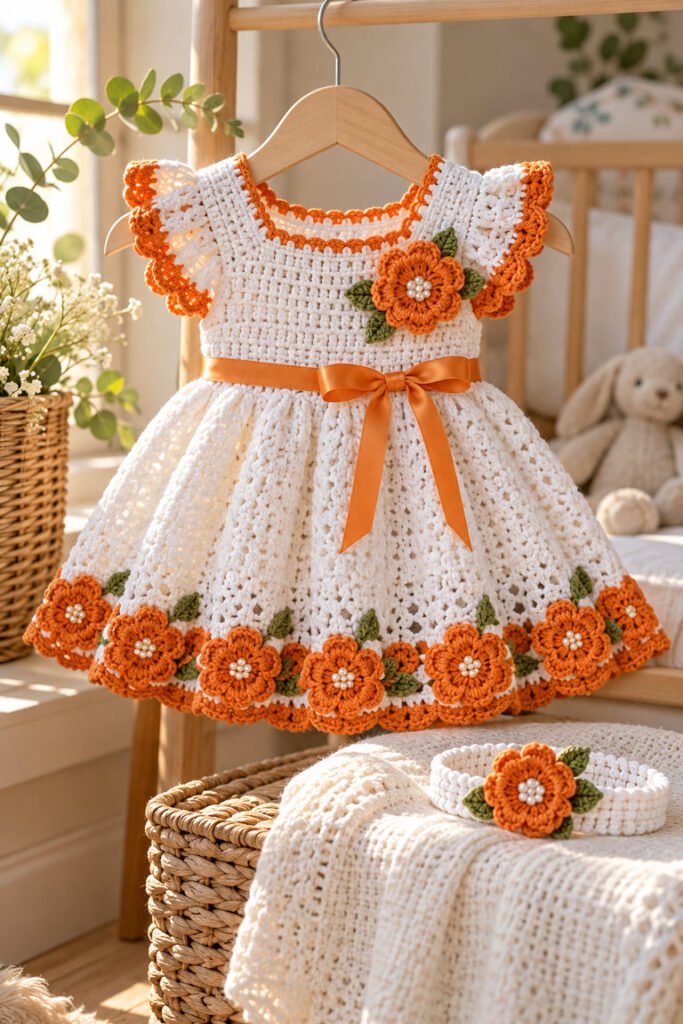
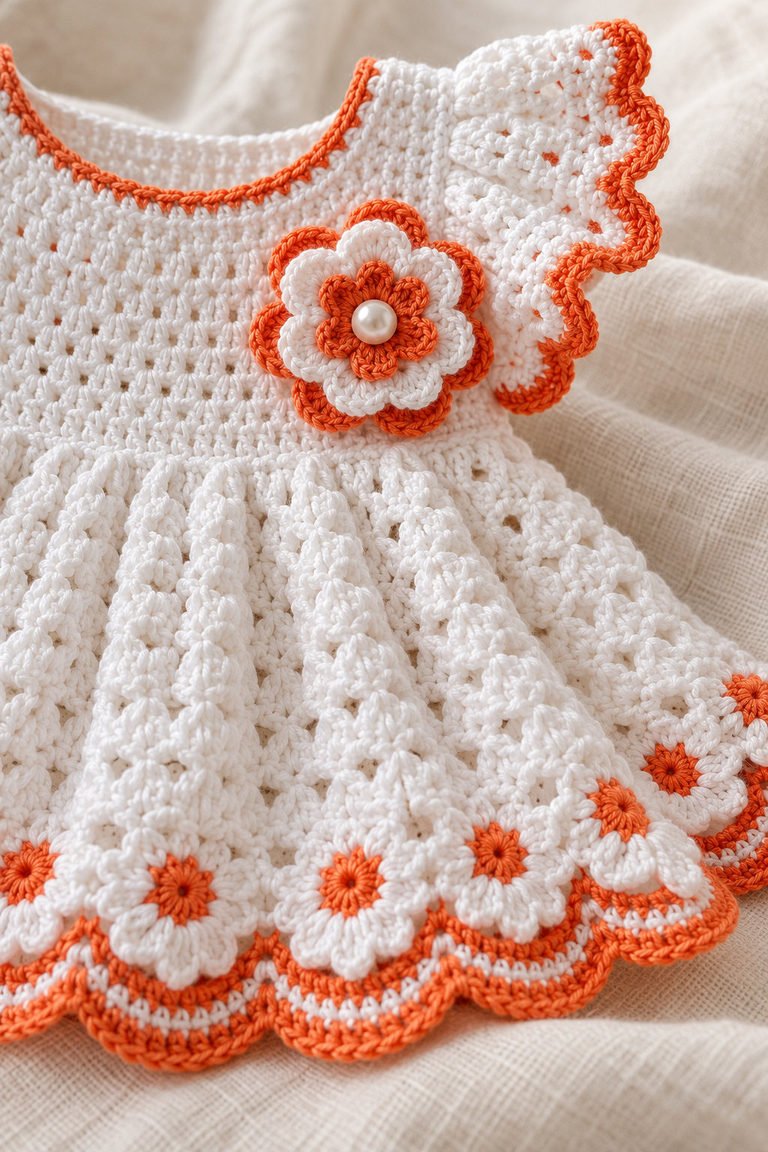
This white and orange crochet baby frock is a sweet occasion outfit with a clean white base and bright floral accents. The reference image shows a fitted-looking bodice, rounded neckline, flutter sleeves edged in orange, a full skirt, a flower at the chest, and a two-tone scalloped floral hem. A matching flower headband completes the look.
This is an image-based design guide, not a tested, counted pattern. The photo does not provide stitch counts, yarn weight, hook size, gauge, or size measurements, so the guidance below focuses on planning and construction choices that can reasonably be inferred from the visible garment. Use a size-specific pattern or your own swatch calculations for exact instructions.
Why You’ll Love This Dress
- A cheerful color combination: White keeps the dress classic while orange trim and flowers give it a sunny pop.
- Lovely handmade details: Flutter sleeves, a flower applique, and a scalloped skirt border make the silhouette feel special.
- Easy to personalize: Change the accent shade, flower placement, skirt fullness, or sleeve finish to suit the occasion.
- A coordinated outfit: The reference pairs the frock with a matching flower headband; the dress also works with a simple cardigan or leggings.
Skill Level
Plan for an advanced-beginner to intermediate project if you are following a suitable garment pattern: shaping a fitted bodice, making a skirt, adding sleeves, and finishing decorative edging all require careful fit checks. A confident beginner can attempt a simpler version with a clear size-specific pattern and familiar stitches.
Materials
- Smooth white yarn for the main fabric
- A small amount of orange yarn for edging and flowers
- Optional green yarn for small leaf accents
- Crochet hook chosen for your yarn and swatch
- Flexible measuring tape and stitch markers
- Tapestry needle and scissors
- Optional soft ribbon for the waist detail
- Optional small amount of contrasting yarn for the flower center
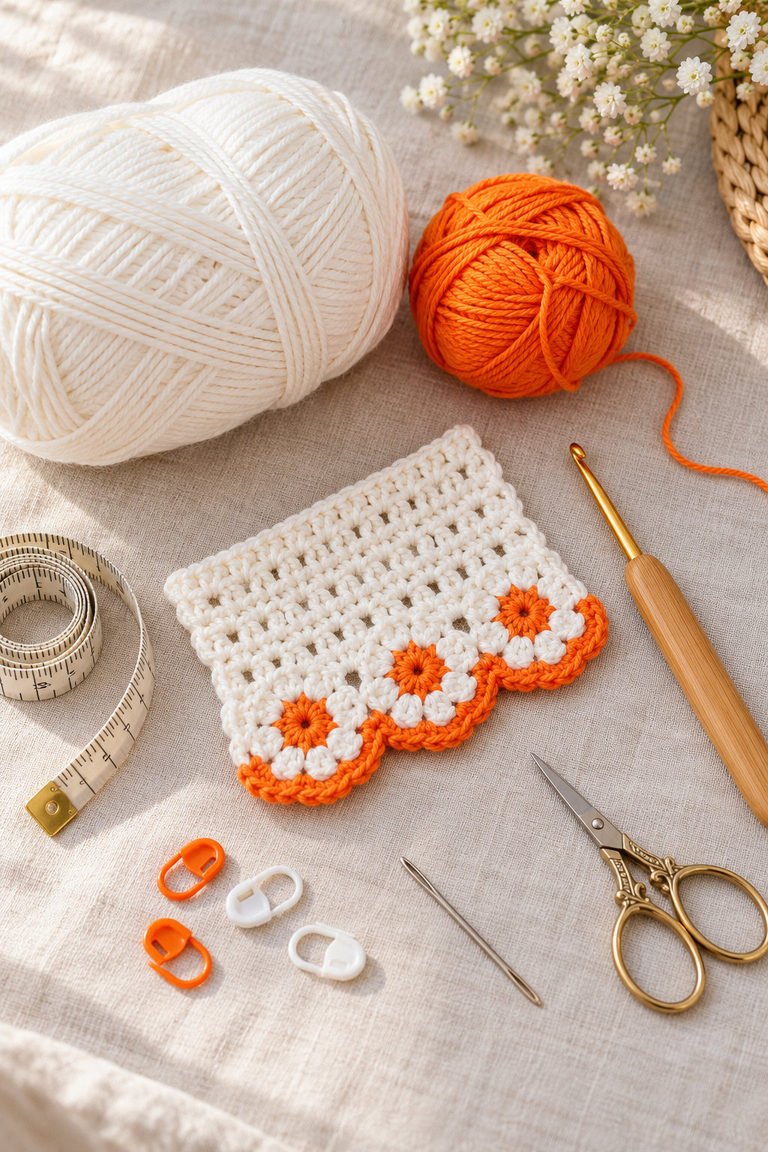
Choose baby-friendly yarn with a soft hand and a care label that suits frequent washing. Avoid scratchy fibers and small hard embellishments that could loosen.
Yarn Recommendations
A smooth cotton or cotton-blend yarn is a practical choice for a warm-weather baby dress because the stitches are easy to see and the fabric can feel breathable. A soft acrylic or washable blend may be convenient when machine care is important. The image does not identify fiber, yarn weight, or brand, so treat these as options rather than specifications.
Use a similar yarn weight for the white fabric and colored details so the orange edging does not pull or pucker. Check the care labels and make a small swatch before committing to the full garment.
Hook Size
The hook size cannot be determined from the photo. Start with the size recommended on your yarn label, then adjust until your swatch has the drape and density you want. For a baby garment, avoid a fabric so loose that fingers or toes can catch in the openings, and avoid a stiff fabric that restricts movement.
Gauge
No numeric gauge is visible in the reference. Work a swatch in the stitch pattern and yarn you plan to use, wash and dry it as you expect to care for the dress, then measure it after it has relaxed. Follow the gauge of your chosen size-specific pattern, or use the swatch and body measurements to calculate your own fabric dimensions.
Finished Measurements
The image gives no scale or finished measurements. Before starting, take the intended wearer’s chest, waist, shoulder-to-hem, armhole, and neckline measurements. Compare them with a comfortable garment and include the ease recommended by your chosen pattern. Check the bodice before continuing, and remeasure the skirt as it grows; crochet fabric can relax with wear and washing.
Crochet Abbreviations
These common abbreviations use US crochet terminology. They are a general reference, not a stitch key for the pictured dress.
- ch — chain
- sl st — slip stitch
- sc — single crochet
- hdc — half double crochet
- dc — double crochet
- st(s) — stitch(es)
- rep — repeat
- RS / WS — right side / wrong side
Construction Overview
The visible design has a white bodice and full skirt, orange-edged flutter sleeves, a flower applique, a ribbon detail at the waist, and a scalloped floral hem. The image does not reveal whether the dress is made in one piece, in separate panels, or from a top-down yoke. A practical plan is to choose a construction method from a size-specific pattern, make the bodice and skirt in the order it specifies, then add the sleeves, edging, flower, and waist finish. Keep checking fit and fabric drape as you go.
Step-by-Step Guidance From the Image
The following steps describe a reasonable project workflow based on visible features. They are not row-by-row pattern instructions, and no stitch counts or exact dimensions are implied.
1. Choose a size plan and take measurements
Select a pattern or construction method that covers the intended size. Record chest, waist, armhole, neckline, and desired skirt length. Decide whether you want the full skirt and flutter sleeves shown in the image.
2. Make and wash a swatch
Swatch the main white yarn and test the orange yarn alongside it. After washing and drying, check the fabric’s softness, stretch, opacity, and drape. Adjust the hook if needed before using the swatch for fit planning.
3. Work the bodice using your chosen pattern
The picture suggests a fitted upper section with a rounded neckline. Follow the shaping and size guidance in your selected pattern, and pause to check the chest and armholes. The exact shaping cannot be reconstructed from the photograph alone.
4. Add or prepare the flutter sleeves
The sleeves appear short and ruffled, with orange trim at the edge. Use the sleeve method from your chosen pattern, then work a consistent orange finish around each sleeve opening. Compare both sides for matching length and fullness.

5. Form the skirt and join it to the bodice
The skirt has a noticeable flare and soft gathers. Follow your chosen pattern’s method for increasing or gathering the skirt, and attach it to the bodice if it is made separately. Check that the waist seam sits comfortably and does not feel bulky.
6. Finish the hem with a two-color floral edge
The reference shows a white skirt ending in orange-and-white flower-like scallops. Work a decorative border only after the skirt length and circumference are set. If making your own edging, test a short section first to make sure it lies flat and does not ruffle unintentionally.
7. Add the flower and waist detail
The image shows a layered flower at the chest and orange ribbon threaded around the waist, finished in a bow. Crochet and securely sew on any appliques. If you include ribbon, keep the ends short and secure; avoid long loose ties and remove decorative accessories for sleep. Check that all attachments are firmly sewn and safe for the child’s age.
8. Weave in ends and check the fit
Secure yarn tails on the wrong side, block gently according to the yarn label, and try the dress over the intended underlayer. Inspect the neckline, armholes, waist, and hem for comfort and any loose parts.
Customization Ideas
- Swap orange for coral, yellow, lavender, or a seasonal accent color.
- Make the skirt shorter or longer after checking the intended wearer’s measurements.
- Use a simpler edging if you prefer a quicker finish, or add small flowers around the hem for a more decorative border.
- Move the chest flower to one side or omit it for a cleaner bodice.
- Add green leaves to the flower center or hem motifs.
- Replace the ribbon with a crocheted tie or a secure waist band; keep ties short and supervised.
- Make a coordinating headband only for children old enough to wear it safely under supervision.
Finishing
Weave in all ends securely and sew on appliques with matching yarn, taking small stitches through a stable part of the fabric. Shape the neckline, sleeves, and scallops while damp if the yarn care label permits. Let the dress dry flat so the skirt does not stretch out of shape. Before wearing, inspect every attachment and trim edge.
Care Instructions
Follow the yarn label first. In general, wash gently in cool water with mild detergent, support the garment while wet, and dry flat away from direct heat. Avoid hanging a wet crochet dress, which can lengthen the skirt. Store folded, and remove any ribbon or headband before washing if its material needs separate care.
Helpful Tips
- Mark the center front and back so the neckline, flower, and waist details stay aligned.
- Use stitch markers at the sides and waist while checking symmetry.
- Test the orange edging on a swatch before adding it to the whole garment.
- Choose a soft, washable yarn and verify colorfastness, especially for saturated orange yarn.
- Recheck fit after washing the swatch and during construction; crochet fabric may relax.
- Keep ribbons, beads, buttons, and other small or loose details age-appropriate and securely attached. Never leave an infant unattended with ties or detachable accessories.
- Treat this as visual inspiration unless you have a tested pattern with complete sizing and stitch instructions.
Frequently Asked Questions
Is this a complete tested crochet pattern?
No. The reference image does not include row instructions, stitch counts, gauge, yarn details, or sizing. This article is an image-based design and construction guide, not a tested counted pattern.
What yarn works best for a white and orange baby frock?
Soft cotton, cotton blends, or washable baby-friendly yarn are reasonable options. Choose a fiber that feels comfortable and suits the care routine, then swatch before beginning.
What hook size should I use?
The photo does not identify a hook size. Use the yarn label and the gauge of your selected pattern as starting points, then adjust based on your washed swatch.
How do I choose the dress size?
Measure the child and compare those measurements with the sizing notes in your chosen pattern. The photo has no reliable scale, so it cannot establish a size or finished dimensions.
Can I replace the ribbon waist detail?
Yes. A crocheted tie or a simple waist finish can give a similar look. Keep any tie short, secure, age-appropriate, and supervised; remove it for sleep.
Can I simplify the floral hem?
Yes. A plain orange border or a simpler scallop can echo the color palette with less finishing work. Make a small test section first to check that the hem lies flat.
Final Thoughts
A white crochet frock with orange flowers and scalloped edging makes a bright handmade outfit for a special day or a sunny season. Use the image for color and detail inspiration, and rely on a properly sized pattern, measurements, and a washed gauge swatch for the actual fit. Thoughtful finishing and secure, age-appropriate details will help make the dress comfortable as well as charming.


