
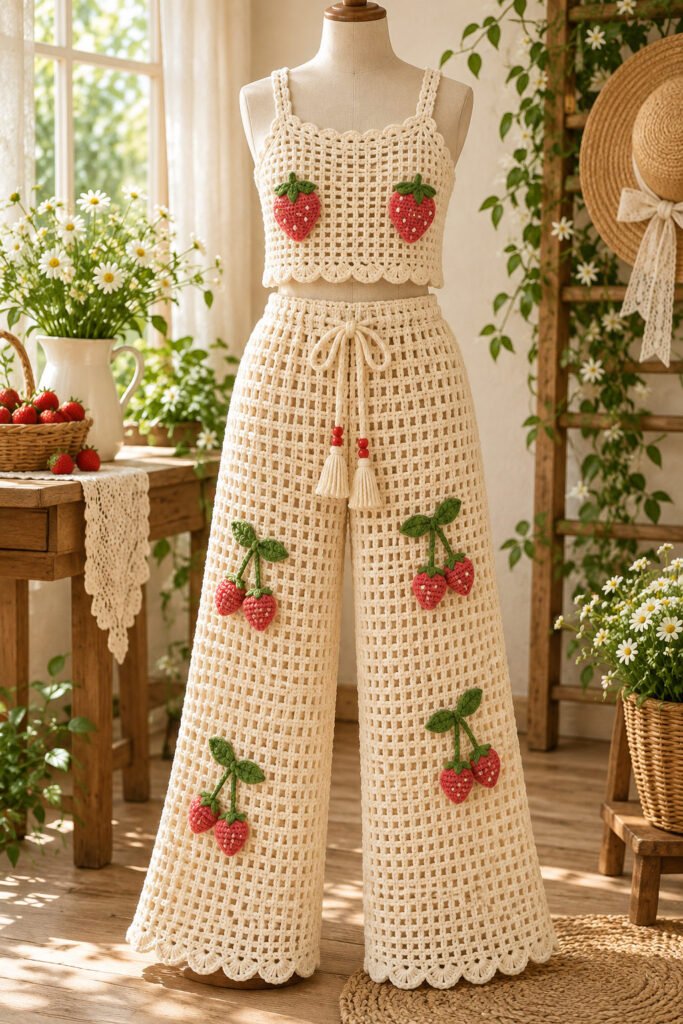
Crochet pants can be relaxed and simple or detailed and fashion-forward. The reference image features a cream openwork two-piece outfit: wide-leg trousers with a tie waist, scalloped hems, and strawberry appliques, paired with a matching sleeveless top. This guide focuses on planning a similar pair of crochet pants, with ideas for adapting the silhouette to different skill levels.
The photograph does not show a stitch sequence, yarn label, gauge, hook size, or finished measurements. This is an original image-based construction guide, not a tested counted pattern. Use a size-specific pattern or your own swatch-based calculations when you need exact stitch counts.
Why You’ll Love This Crochet Pants Project
- A breezy handmade look: Openwork stitches create the light, airy texture seen in the reference.
- Easy to personalize: Adjust the length, leg width, waist finish, colors, and appliques to make the pants your own.
- A useful skill-building garment: Pants let you practice measurement, fit checks, shaping, and finishing on a wearable project.
- A matching-set option: Coordinate the trousers with a simple crochet top, or wear them with a ready-made camisole or tee.
Crochet Pants Pattern Styles to Explore
- Simple lounge pants: A roomy fit, familiar stitch texture, and drawstring waist make a gentle first garment project.
- Airy wide-leg trousers: Openwork fabric and a flowing leg echo the cream pants in the reference; plan for a comfortable underlayer if the mesh is sheer.
- Cropped summer pants: A shorter leg length uses the same fit-planning skills while reducing the amount of fabric to complete.
- Motif-trim pants: Add strawberries, flowers, or leaves to a simple base pair for a decorative look without changing the garment construction.
- Advanced colorwork or panel designs: Experienced crocheters can explore stripes, granny-style panels, or separate textured sections while keeping the rise and leg fit in view.
Skill Level: Beginner to Beyond
The skill level depends on the construction method and details you choose. A confident beginner can start with roomy drawstring pants and a straightforward stitch pattern. Separate legs, more fitted shaping, an all-over mesh texture, scalloped hems, and sewn-on motifs add steps, making the pictured look more suitable for an advanced beginner or intermediate crocheter.
If this is your first garment, choose a forgiving fit and a clear pattern with size guidance. If you have made garments before, you can explore shaping, mesh placement, colorwork, and decorative appliques.
Materials
- Smooth yarn in a main shade such as cream or natural white
- Small amounts of red or strawberry pink and leaf green for appliques
- Crochet hook selected to suit your yarn and swatch
- Flexible tape measure and stitch markers
- Tapestry needle for joining seams and weaving in ends
- Scissors and a notebook for recording measurements and gauge
- Optional soft elastic or a crocheted drawstring for the waist
- Optional light lining or underlayer if the openwork fabric is sheer

Yarn Recommendations
For lightweight summer trousers, consider a smooth cotton or cotton-blend yarn with clear stitch definition. The reference image does not identify the yarn fiber or weight, so use the yarn label as a starting point and swatch before planning the garment. A lighter yarn can create a fluid drape; a heavier yarn may make wide-leg pants feel bulky.
Choose a yarn that feels comfortable against skin and can be washed according to its care label. For a coordinated set, use compatible yarn weights for the pants, matching top, and strawberry appliques. If the main fabric is open, plan how you will wear it—over shorts, a slip, or another comfortable layer.
Hook Size
No verified hook size can be read from the photograph. Begin with the size suggested on your yarn label, then adjust after making and washing a swatch. The fabric should drape comfortably without stretching excessively under its own weight. A hook that is too large can make the mesh unstable; one that is too small may make the pants stiff.
Gauge
The image does not provide a stitch pattern or numeric gauge. Make a swatch in the stitch pattern you plan to use, wash and dry it as you expect to care for the pants, then measure its stitch and row density. Use that information with your body measurements to plan width and length. Recheck the fabric after it has relaxed, because some yarns grow with wear or washing.
Finished Measurements
The reference photo does not establish a size or finished dimensions. Before beginning, record:
- Waist circumference where the waistband will sit
- Hip circumference at the fullest point
- Front and back rise for comfortable sitting and movement
- Upper-thigh circumference
- Inseam and desired outseam length
- Desired leg opening and waistband depth
Compare your planned garment ease with a pair of pants that fits comfortably. For wide-leg trousers, check the hip and rise first; then decide how much width you want through each leg. Try on or measure the work as you go rather than relying on the photo for scale.
Crochet Abbreviations
Abbreviations below use standard US crochet terminology. The exact stitch repeat is not visible in the reference.
- ch — chain
- sl st — slip stitch
- sc — single crochet
- hdc — half double crochet
- dc — double crochet
- st(s) — stitch(es)
- rep — repeat
- RS / WS — right side / wrong side
Construction Overview
The image suggests high-waisted, wide-leg pants with an adjustable drawstring waist, open mesh fabric, decorative strawberry motifs, and scalloped lower edges. It does not reveal the original construction. A common approach is to work the waistband and upper body first, divide the fabric at the crotch, then crochet each leg separately to the desired length. Another option is to make two leg pieces and join them at the rise. Choose the method that matches your experience and the pattern or calculations you are following.
Step-by-Step Crochet Pants Guide
1. Select a construction path
For a first pair, choose a pattern with clear fit notes and a simple, roomy shape. A top-down method can make it easier to check the waist, hip, and rise before continuing into the legs. If you prefer flat pieces, make matching front and back panels and seam them after checking the measurements.
2. Swatch and plan the fit
Make a washed swatch in the intended yarn and stitch. Measure your waist, hips, rise, thigh, inseam, and desired leg opening. Use the swatch results to translate those measurements into your chosen pattern plan. Do not assume the open mesh in the image will stretch or drape like your own yarn.
3. Work the waistband and upper section
Create a comfortable waistband that stays in place without digging in. The image shows a drawstring-style finish; you can use a crocheted cord or a soft elastic channel if that suits your pattern. Continue into the upper body and check the hip and rise before splitting for the legs.
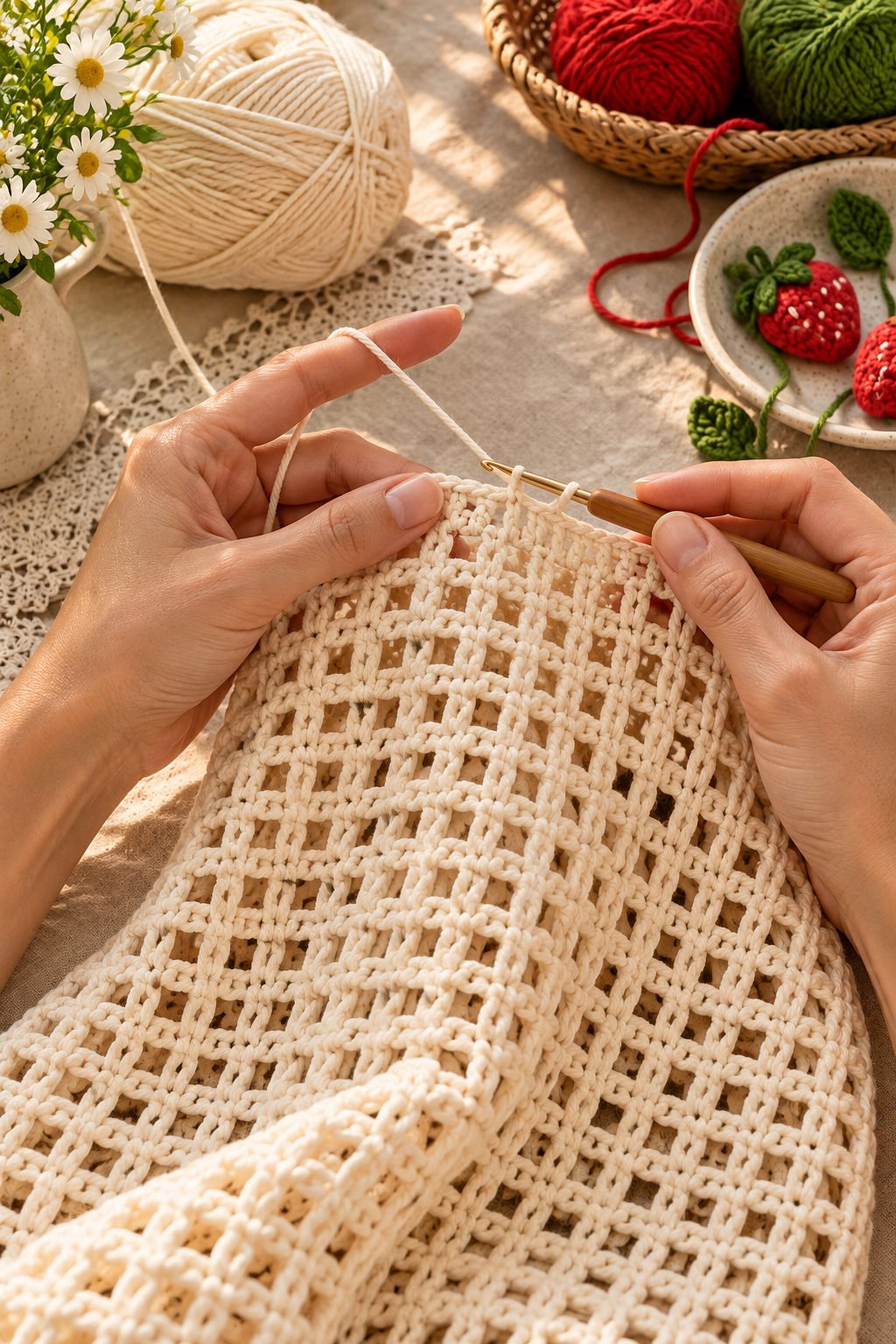
4. Separate and shape the legs
Mark the center points for the two leg openings and work each leg separately. Keep the leg widths consistent, and compare the inseam and outseam with your notes as you go. For a wide-leg look, maintain a generous opening; for a more tapered fit, plan gradual shaping using the instructions in your chosen pattern.
5. Finish the hems
Try the pants on or check them against the planned inseam before adding the edging. A scalloped border can echo the reference, but a simple straight edge is easier to wear and maintain. Keep the border light so it does not pull down on the openwork fabric.
6. Add strawberry motifs
Crochet or embroider small strawberries in red or pink yarn with green leaves. Arrange the motifs on the pants before attaching them, then sew each one down securely around its base. If the pants will be worn often, keep appliques flat and avoid heavy embellishments that could snag or distort the mesh.

7. Make a matching top if desired
The picture includes a coordinating sleeveless top with strawberry details. Treat it as an optional companion piece: use the pants palette and motif placement for visual continuity, and plan the top’s fit separately. The reference does not provide enough information to draft a matching top pattern.
Customization Ideas
- Use solid fabric for the upper portion and open mesh only where you want extra airflow.
- Try ankle-length, cropped, or full-length legs based on your wardrobe.
- Make a plain drawstring waistband or add a soft elastic casing.
- Replace strawberry motifs with flowers, cherries, leaves, or simple embroidered accents.
- Choose a straight hem for a minimal finish or a small scallop for a decorative edge.
- Use a contrasting color for the waistband or hems while keeping the body neutral.
Finishing
Weave in all ends securely and block the pants gently according to the yarn label. Lay the legs flat to check that they are the same length and that the hems sit evenly. Test the drawstring or elastic so the waistband remains comfortable. Inspect the crotch join and motif attachments, then try the pants on over the intended underlayer to check coverage and movement.

Care Instructions
Follow the yarn label. For washable yarn, use a gentle cycle or hand wash in cool water, supporting the garment so the openwork does not stretch while wet. Press water out in a towel without wringing, reshape the legs and hems, and dry flat. Avoid hanging wet crochet pants, which can lengthen them. Store folded and check the care method before washing any elastic, lining, or contrasting appliques.
Helpful Tips
- Make and wash a swatch before choosing your hook or calculating fit.
- Take measurements over the underlayer you expect to wear with the pants.
- Recheck the rise and hip fit before splitting the legs.
- Use markers at the side seams and center points to help keep shaping balanced.
- Keep openwork fabric light; a heavy yarn can pull down on the waistband.
- Try on the pants before deciding the final inseam and hem style.
- Secure strawberry appliques along their edges so they do not snag.
- If the fabric is sheer, plan a comfortable lining or underlayer from the start.
Frequently Asked Questions
Are these exact counted crochet pants instructions?
No. The image does not provide stitch counts, a stitch repeat, sizing, or a verified yarn and hook. This article is an original visual construction guide. Use a counted, size-specific pattern or calculate your own pieces from a washed swatch and body measurements.
Are crochet pants suitable for beginners?
They can be, if you choose a simple design with clear sizing and a forgiving fit. The wide-leg, openwork look in the image involves garment measurements, leg construction, and decorative finishing, so it is more approachable after you are comfortable with basic stitches and swatching.
What yarn works best for crochet pants?
A smooth, breathable cotton or cotton blend is a useful starting point for summer pants. Check the yarn label and swatch for drape, comfort, and washing behavior; the photo does not identify the original yarn.
How do I keep crochet pants from stretching out?
Choose yarn with suitable recovery, make a washed swatch, keep the fabric from becoming too loose, and avoid hanging the pants while wet. A well-planned waistband and comfortable ease also help the garment stay in place.
Do I need to line openwork crochet pants?
Not necessarily, but open mesh can be sheer. Try the fabric over the underlayer you plan to wear and decide whether a lining, shorts, or slip is more comfortable for you.
Can I make the pants without the matching top?
Yes. The trousers can be a standalone project. The top in the image is a styling idea, and its stitch counts and construction are not visible.
Final Thoughts
Easy crochet pants patterns can range from relaxed beginner-friendly shapes to detailed openwork trousers with custom shaping and motifs. The cream strawberry set in the image is a lovely starting point for planning your own look: swatch first, measure carefully, and choose a construction method that matches your skill level. Thoughtful fit checks and light finishing help make handmade pants comfortable as well as eye-catching.

