
Introduction
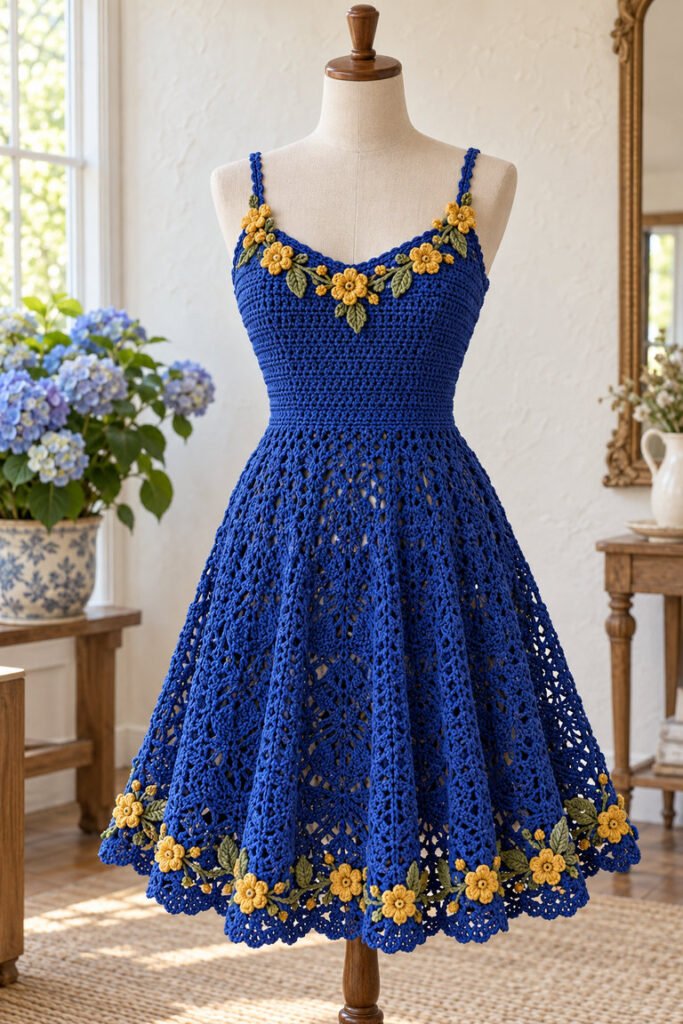
This handmade crochet summer dress pairs a rich cobalt-blue fabric with cheerful golden flowers and soft green leaves. The reference design has a fitted bodice, narrow straps, an open lace skirt, and floral edging that gives the hem a garden-inspired finish. It is a striking project for warm-weather wardrobes, special occasions, or anyone who enjoys adding crochet motifs to a wearable piece.
This article is a visual design and construction guide inspired by the photo, not a tested, counted pattern. The image does not provide yarn weight, hook size, gauge, stitch counts, sizing, or construction details. Use a complete size-specific pattern or your own tested calculations for exact shaping and fit.

What Makes This Summer Dress Special
- A bold handmade color: Cobalt blue makes the lace texture and flower trim stand out.
- A feminine silhouette: A close-fitting bodice and gently flared skirt create a classic summer shape.
- Dimensional floral accents: Golden crochet flowers and green leaves frame the neckline and hem.
- Room to personalize: Adjust the color palette, skirt length, flower placement, and strap style to suit your taste.
Skill Level
Plan for an intermediate project if you are making a fitted garment from scratch. It involves maintaining even fabric, shaping a bodice, checking fit, building a skirt, and attaching small motifs neatly. A confident beginner can adapt a familiar dress pattern and add the floral details after the main garment is complete.
Materials
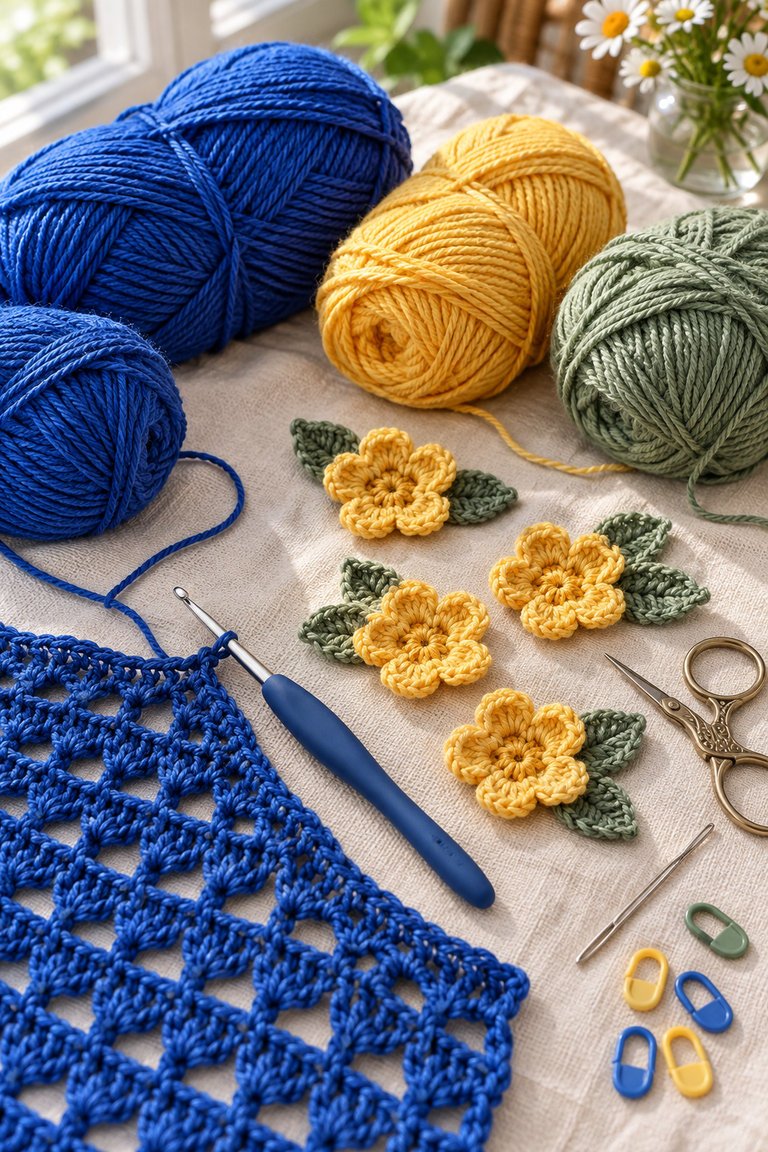
- Smooth yarn in cobalt or royal blue for the dress
- Small amounts of golden-yellow yarn for the flowers
- Muted green yarn for leaves and optional flower centers
- Crochet hook selected to suit your yarn and desired fabric
- Tapestry needle, scissors, stitch markers, and measuring tape
- Blocking supplies suitable for your yarn fiber
- Optional lining or a slip if you prefer more coverage beneath openwork
Choosing Yarn for a Summer Garment
Cotton and cotton blends are popular choices for warm-weather crochet because they have clear stitch definition and feel comfortable against the skin. A cotton-bamboo blend can add drape, while a mercerized cotton often gives motifs a smooth, defined finish. Check the yarn label and consider how the fiber behaves after washing; some yarns relax or lengthen more than others.
Choose a yarn that is comfortable for the wearer and consistent across the dress and appliques. If the flower yarn is much thicker than the main yarn, the motifs may feel bulky. If it is much thinner, the flowers can look too small against the lace.
Hook Size and Gauge
The reference photo does not identify a hook size or gauge. Start with the yarn label’s recommended hook, then crochet and wash a swatch in the stitch pattern you plan to use. Let it dry as you expect to care for the finished dress, and measure it without stretching. Use the swatch to choose a hook that creates a fabric with the drape and coverage you want.
For a fitted garment, gauge affects both comfort and finished measurements. Record your stitch and row gauge and compare it with the pattern or your own sizing plan before you begin the bodice.
Fit and Measurement Planning
Take current body measurements over the undergarments or layer the wearer plans to use. Useful measurements include upper bust, full bust, waist, desired bodice length, skirt length, and the distance between strap positions. Compare the garment with a well-fitting top or dress, allowing for the stretch and drape of your yarn.
Crochet fabric can grow with wear, particularly when the skirt is heavy or made with a drapey fiber. Consider this when deciding on bodice ease and dress length. Recheck the bodice as you work rather than relying on a single measurement at the beginning.
Construction Overview
The photo suggests a shaped bodice joined to a flared lace skirt, with straps and decorative flowers added as finishing details. A practical plan is to make a gauge swatch, work the bodice to the wearer’s measurements, test the neckline and straps, and then continue into the skirt. The exact method—worked in the round, in panels, or in separate pieces—depends on the pattern you are following.
Step-by-Step Design Workflow
These steps help plan a similar look; they are not row-by-row crochet instructions.
1. Set the size and finished length
Write down the wearer’s measurements and choose the amount of ease you prefer. Decide whether the skirt will end above the knee, at the knee, or lower, and note the planned bodice length and strap placement.
2. Make and wash a gauge swatch
Sample the main stitch pattern with the yarn and hook you intend to use. Wash and dry it according to the yarn label, then measure the result. Adjust the hook or stitch choice if the fabric is too stiff, too open, or too heavy for a summer dress.
3. Shape and check the bodice
Use a tested garment pattern or your own size calculations to make the fitted upper section. Try it on or compare it with the wearer’s measurements at regular intervals. Check that the neckline sits comfortably and that the fabric provides the coverage you want.
4. Add straps and plan the skirt transition
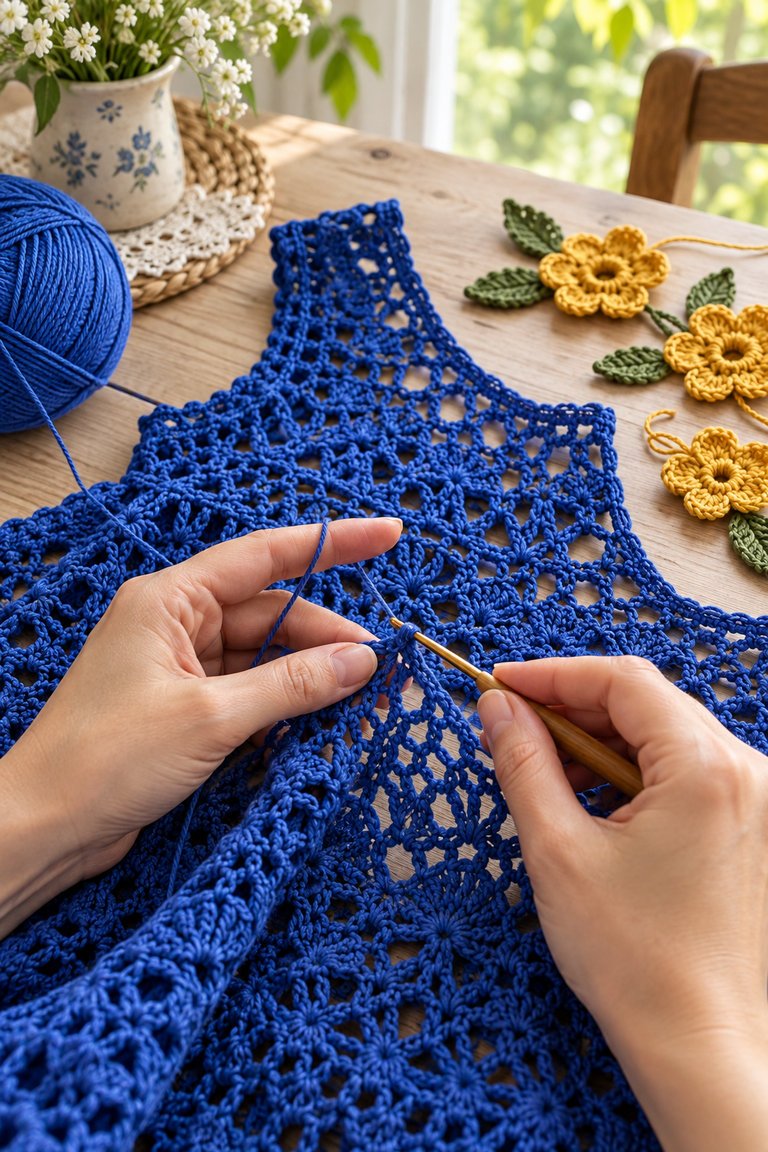
Make straps wide or narrow according to the support and style you want. Secure them firmly and test the fit before continuing. At the waist, use the construction method from your pattern to create a smooth transition into the skirt.
5. Build the skirt with the desired drape
Continue with a lace or openwork stitch that complements the bodice. Increase gradually as needed for the amount of flare you want, checking the width and length as the skirt grows. Use your gauge and measurements rather than guessing the number of increases from the photo.
6. Crochet and place the flowers
Make small golden flowers and green leaves separately, then arrange them around the neckline and lower edge. Pin the motifs in place and view the dress from a distance to balance their spacing before sewing them down. Keep the flower trim flexible so it does not pull or distort the dress fabric.

7. Finish, block, and recheck fit
Weave in yarn ends securely and block the dress according to the fiber’s care instructions. Once dry, check the straps, seams, hem, and motif attachments. Try the garment on again and make any small finishing adjustments before wearing it.
Customization Ideas
- Use teal, lavender, coral, or cream instead of cobalt blue.
- Replace the yellow flowers with daisies, small rosettes, or simple embroidered petals.
- Add leaves only at the hem for a quieter design.
- Make the skirt shorter or longer while preserving the bodice proportions.
- Try a square neckline, scoop neckline, or wider straps if those suit the wearer better.
- Add a light lining or wear a coordinating slip beneath the openwork skirt.
Finishing and Care
Blocking can help even the lace and let the skirt hang smoothly. Follow the yarn label for washing and drying, and test any blocking method on your swatch first. Store the dress folded rather than hanging if the yarn is prone to stretching. After wear, check that the flower appliques and straps remain secure.
Helpful Tips
- Keep a written record of gauge, measurements, and any adjustments you make.
- Recheck the bodice fit before beginning the skirt; changes are easier early on.
- Pin the flower placement before stitching the motifs permanently.
- Use a lining or slip if the openwork reveals more than you want.
- Consider the finished garment’s weight, since a long or dense skirt may stretch with wear.
- Follow a complete tested pattern for stitch counts and exact shaping.
Frequently Asked Questions
Is this a complete counted crochet dress pattern?
No. The reference photo shows the design but does not include stitch counts, yarn details, gauge, size measurements, or row-by-row instructions. This is an original visual planning and construction guide, not a tested pattern.
What yarn works well for a crochet summer dress?
Cotton or a cotton blend is a common option for warm-weather garments. Make and wash a swatch first so you can judge softness, drape, coverage, and how much the fabric may grow.
How can I make sure the dress fits?
Use current body measurements and a washed gauge swatch. Check the bodice and straps during construction, and remeasure the skirt as it grows. Follow a tested size-specific pattern for exact shaping.
How do I make the skirt less see-through?
Choose a denser stitch pattern, add a lining, or wear a coordinating slip. Test the fabric in daylight before deciding whether it provides enough coverage.
Can I change the flower colors or placement?
Yes. The floral trim is easy to personalize. Pin the flowers and leaves in place first, then check their balance and make sure they do not weigh down or pucker the fabric.
Final Thoughts
A cobalt crochet dress with sunny flower appliques makes a memorable handmade summer piece. Let the photo guide the color and decorative details, then use a reliable pattern or carefully checked measurements for fit and shaping. A washed gauge swatch, thoughtful motif placement, and secure finishing will help the finished garment feel polished and wearable.


