
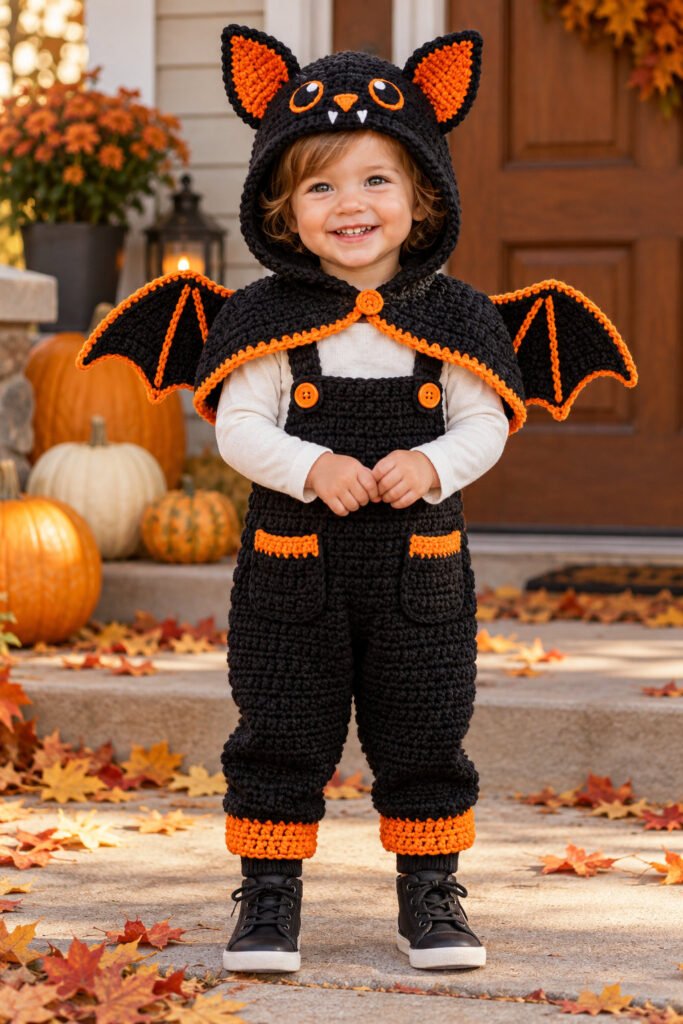
This toddler bat costume crochet pattern guide draws on the image’s playful Halloween look: a black hood with pointed ears, a short winged cape, matching outfit pieces, and bright orange trim. It’s a cozy handmade idea for autumn photos, parties, or trick-or-treating with an adult nearby.
The reference is a visual rather than a written pattern. It does not provide stitch counts, yarn quantities, gauge, hook size, or a size chart, so this article does not invent them or claim the design is tested. Use the steps as an adaptable construction plan, measure the intended wearer, and check fit and comfort before finishing.
Why You’ll Love This Toddler Bat Costume
- Classic black and pumpkin-orange colors make the bat silhouette easy to recognize.
- A hood, winged cape, and matching outfit pieces can be crocheted and fitted separately.
- The orange edging highlights the ears, cape wings, pockets, and cuffs.
- You can simplify the outfit or make it more detailed to suit your time and crochet experience.
- The design can be adapted to layer over comfortable everyday clothes for cooler weather.
Skill Level
Intermediate is a reasonable estimate because the costume combines garment shaping, a hood, small details, color changes, and wing-shaped panels. A confident beginner can work one piece at a time, use simple stitches, and keep the appliqués minimal. Since no written pattern accompanies the image, the exact techniques and difficulty will depend on the construction method you choose.
Materials
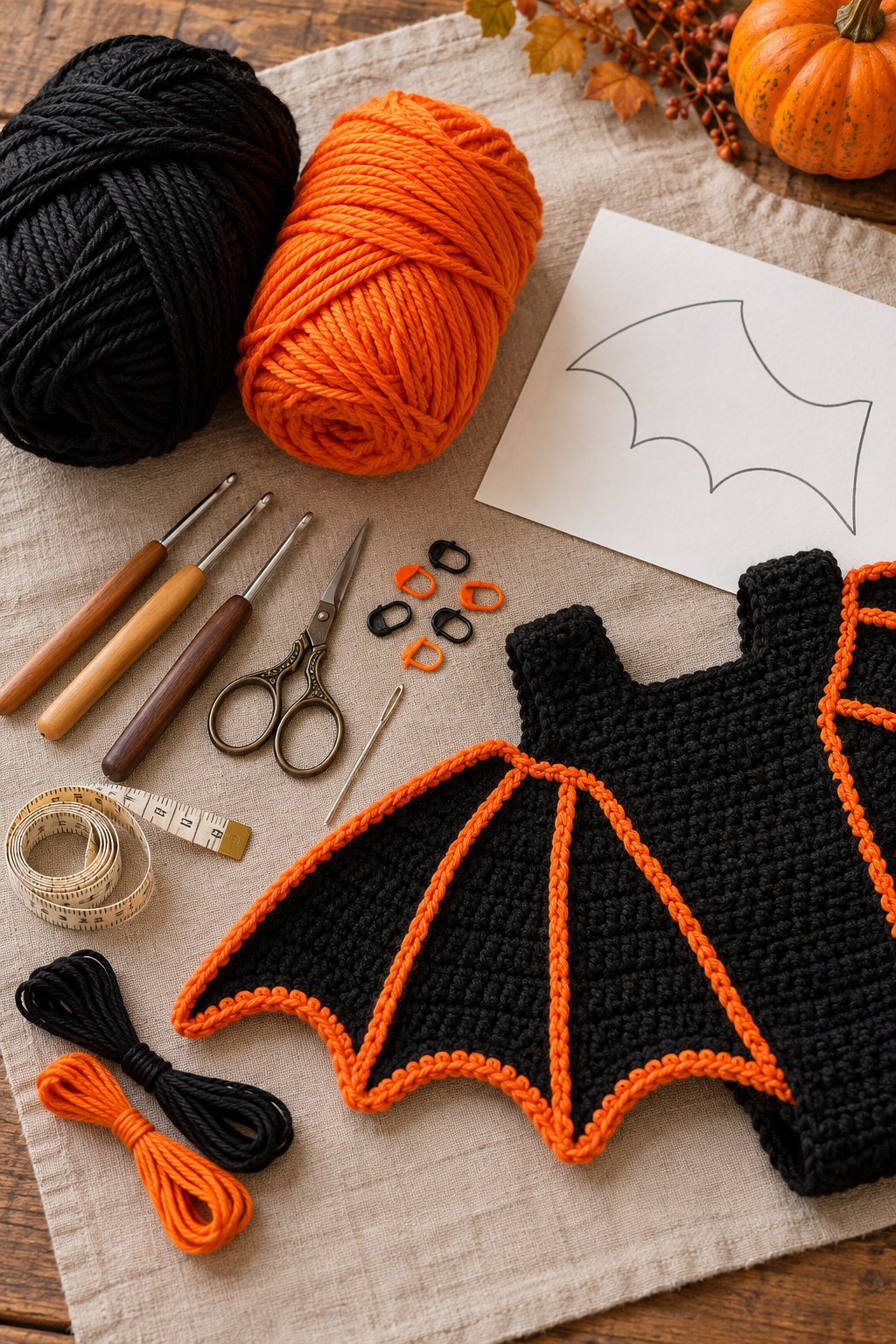
- Black yarn for the main outfit, hood, and wings.
- Pumpkin-orange yarn for edging, inner ears, cuffs, pockets, and decorative outlines.
- A small amount of white or pale yarn for embroidered facial details, if desired.
- A crochet hook suited to your yarn and a swatch that produces comfortable, flexible fabric.
- Yarn needle, scissors, and stitch markers.
- Soft measuring tape to check the intended wearer and garment layers.
- Optional smooth lining fabric for the hood or cape if the crochet texture needs a softer finish against skin.
Yarn Recommendations
Choose a soft, washable yarn that feels comfortable against skin and can hold the outfit’s shape. A smooth acrylic or cotton blend makes stitch placement and orange edging easier to see. For warmer weather, a lighter cotton-rich yarn may feel more breathable; for a cool evening, a soft acrylic blend can provide more coverage. The photograph does not identify a yarn weight, fiber, brand, or amount, so check the ball band and make a swatch before committing.
Use the same yarn thickness for the main pieces and their borders so the edges do not ripple or pull. Keep any embroidered decorations flat and securely fastened. Avoid heavy embellishments that could catch on clothing or playground equipment.
Hook Size
No hook size is visible in the reference. Start with the hook recommended on your chosen yarn label, then make a fabric sample. The garment should be flexible enough for movement and layering, while the hood and appliqué edges should hold their shape. A different hook may work better for a dense trim than for the larger clothing panels.
Gauge
A numeric gauge is not available from the image. For a wearable costume, use a swatch to check drape, softness, and how the fabric behaves after washing. Record your own stitch and row measurements so you can repeat the same fabric if you make another piece.
Finished Measurements
The image does not include a size or finished dimensions. Measure the child over the clothes the costume will be worn with, and compare those measurements with your own panels as you work. Leave comfortable room for sitting, walking, reaching, and layering. Do not rely on the proportions of the photo as a toddler size chart.
Crochet Abbreviations
These standard US terms may be useful when adapting a stitch sequence you already know. They are a reference list, not a stitch-by-stitch pattern for this costume.
- ch = chain
- sl st = slip stitch
- sc = single crochet
- hdc = half double crochet
- dc = double crochet
- inc = increase
- dec = decrease
- st(s) = stitch(es)
- rep = repeat
- FO = fasten off
Construction Overview
The inspiration appears to combine a comfortable black outfit with orange-trimmed cuffs and pockets, a hood with pointed bat ears and a friendly face, and a separate cape or shoulder layer shaped like wings. A bat motif decorates the front. One practical approach is to make the outfit, hood, wing panels, and appliqués as separate components, then fit and sew them together. The reference does not reveal the exact pattern, closures, or garment construction.
Step-by-Step Visual Guidance
- Plan the pieces and fit. Measure the intended wearer over a base layer and decide whether you are making a one-piece outfit or separate top and bottoms. Sketch the hood, cape, wing panels, and trim placement before crocheting.
- Make a swatch. Test your yarn and hook for softness, stretch, and drape. Wash and dry the swatch as you plan to care for the finished costume, then use its behavior to guide your own garment measurements.
- Crochet the main outfit. Work the chosen top or overall shape in black yarn, checking the fit as you go. If making separate pant legs, keep them roomy enough for movement and comfortable layers. Add orange cuffs and pocket borders after checking that they lie flat.
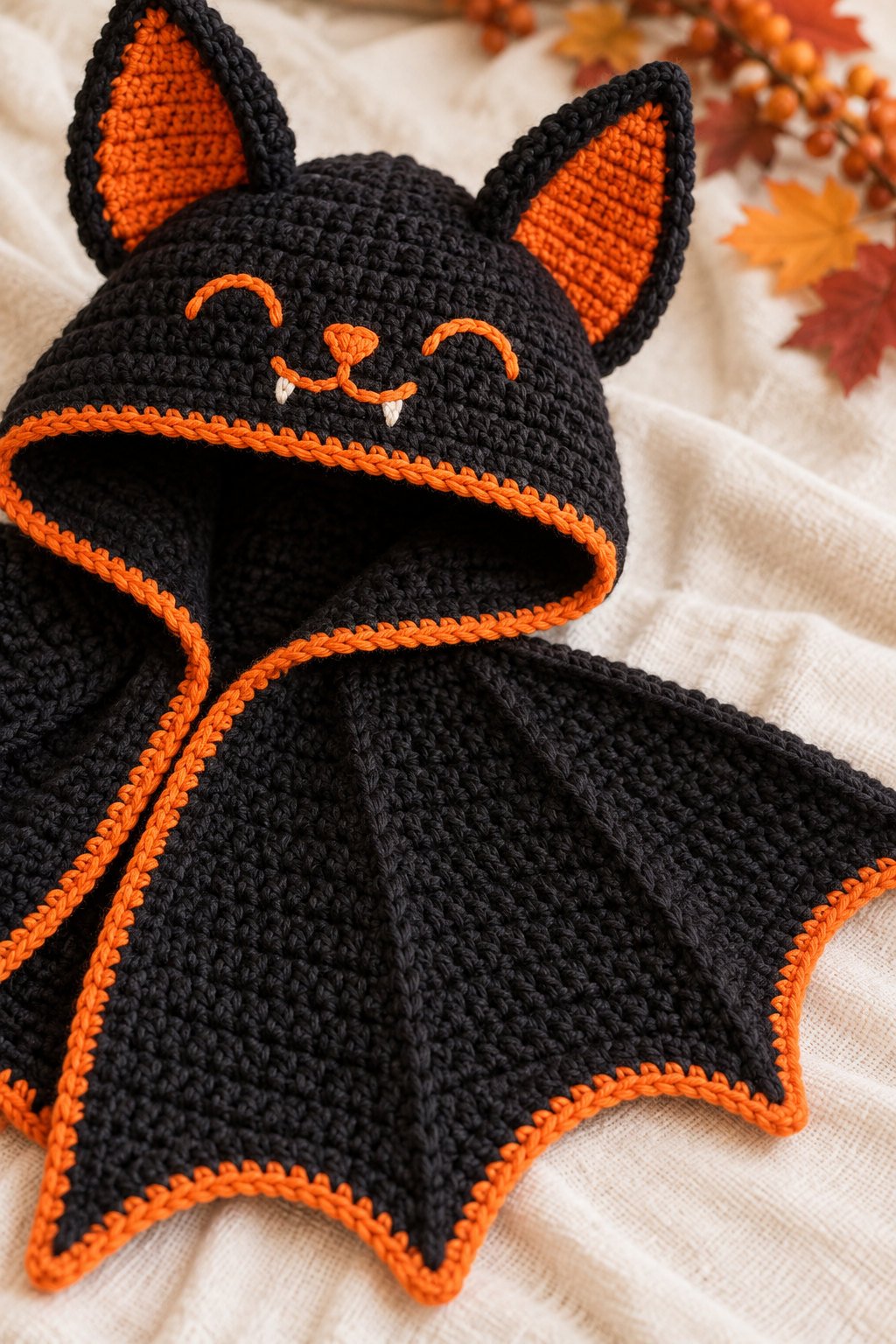
- Shape the hood. Create a comfortable hood that leaves the child’s face and field of vision clear. Add two pointed ears with orange inner panels. Embroider the eyes, nose, and smile with yarn rather than attaching hard or removable decorations.
- Make the bat wings. Crochet two mirrored panels in black, shape the outer edges into a simple wing silhouette, and add orange edging or stitched ribs. Keep the panels light and avoid long dangling points that could snag or drag.
- Add the shoulder cape. Fit the wing panels to a short cape or shoulder layer. Secure the cape at the shoulders or with a flat, child-appropriate closure; do not use a long cord or tie around the neck. Check that the cape does not obstruct the arms or trail near the feet.
- Finish the front details. Add a flat bat motif and orange accents to the outfit. Sew or embroider decorative details securely; avoid loose buttons, beads, safety eyes, and other small detachable pieces on a toddler’s costume.
- Try it on and recheck. With an adult supervising, check that the hood stays away from the eyes, the outfit allows a full range of movement, and nothing is tight, scratchy, trailing, or easy to pull off. Make any fit changes before weaving in the final ends.

Customization Ideas
- Make the outfit a simple black base layer with only the hood and cape for a quicker costume.
- Use rust, gold, or purple edging in place of orange while keeping the bat silhouette.
- Add embroidered stars or a small moon instead of buttons or plastic decorations.
- Make the wing panels shorter and softer for a cape that stays clear of the child’s hands and feet.
- Use a removable warm layer underneath rather than making the crochet outfit thick or restrictive.
Finishing
Weave in yarn tails through several stitches and sew the hood, cape, cuffs, and appliqués securely. Check the inside of the garment for scratchy ends and bulky seams. If you add a lining, make sure it is smooth, breathable, and firmly attached. Wash the finished pieces according to the yarn label and let them dry completely before dressing the child.
Care Instructions
Follow the yarn label for washing and drying. If the costume is machine washable, use a gentle cycle and place small pieces in a wash bag; otherwise hand-wash carefully. Reshape the hood and cape while damp and dry flat. Check seams, edging, and embroidered details before each wear, especially after laundering.
Helpful Toddler Costume Tips
- Keep the hood comfortable and make sure it cannot cover the child’s eyes or restrict hearing.
- Avoid long neck ties, drawstrings, loose buttons, beads, and detachable plastic eyes; use secure shoulder closures and embroidery instead.
- Keep the cape short enough that it cannot drag underfoot or catch easily.
- Choose soft yarn and try the costume over the clothing layers the child will actually wear.
- Supervise costume wear and keep the outfit away from open flames, candles, and hot surfaces.
Frequently Asked Questions
Is this a complete tested pattern?
No. It is an original visual construction guide based on features visible in the photo. The source does not provide written instructions, stitch counts, a size chart, gauge, yarn amount, or finished measurements, and this guide is not claimed to be tested.
Can I make this costume in a different toddler size?
You can adapt the pieces by measuring the child over the intended base layers and checking the fit as you work. The image does not provide a size range or measurement chart, so use your own measurements and leave room for comfortable movement.
How should the cape fasten?
Use a secure, flat closure at the shoulders or another child-appropriate fastening method that does not create a long loop around the neck. Avoid long ties and check that the cape releases or can be removed easily with adult help.
Can I use safety eyes or buttons?
For a toddler costume, embroidered features are a safer decorative choice than small hard parts that could loosen. If you use any closure, choose one that is securely attached, does not create a choking hazard, and is suitable for the child’s age and supervision.
Can the costume be worn trick-or-treating?
The crochet pieces can be part of an outfit, but check the fit, visibility, warmth, and freedom of movement before going out. Add weather-appropriate layers, supervise the child, and keep the costume away from flames and hot surfaces.
Final Thoughts
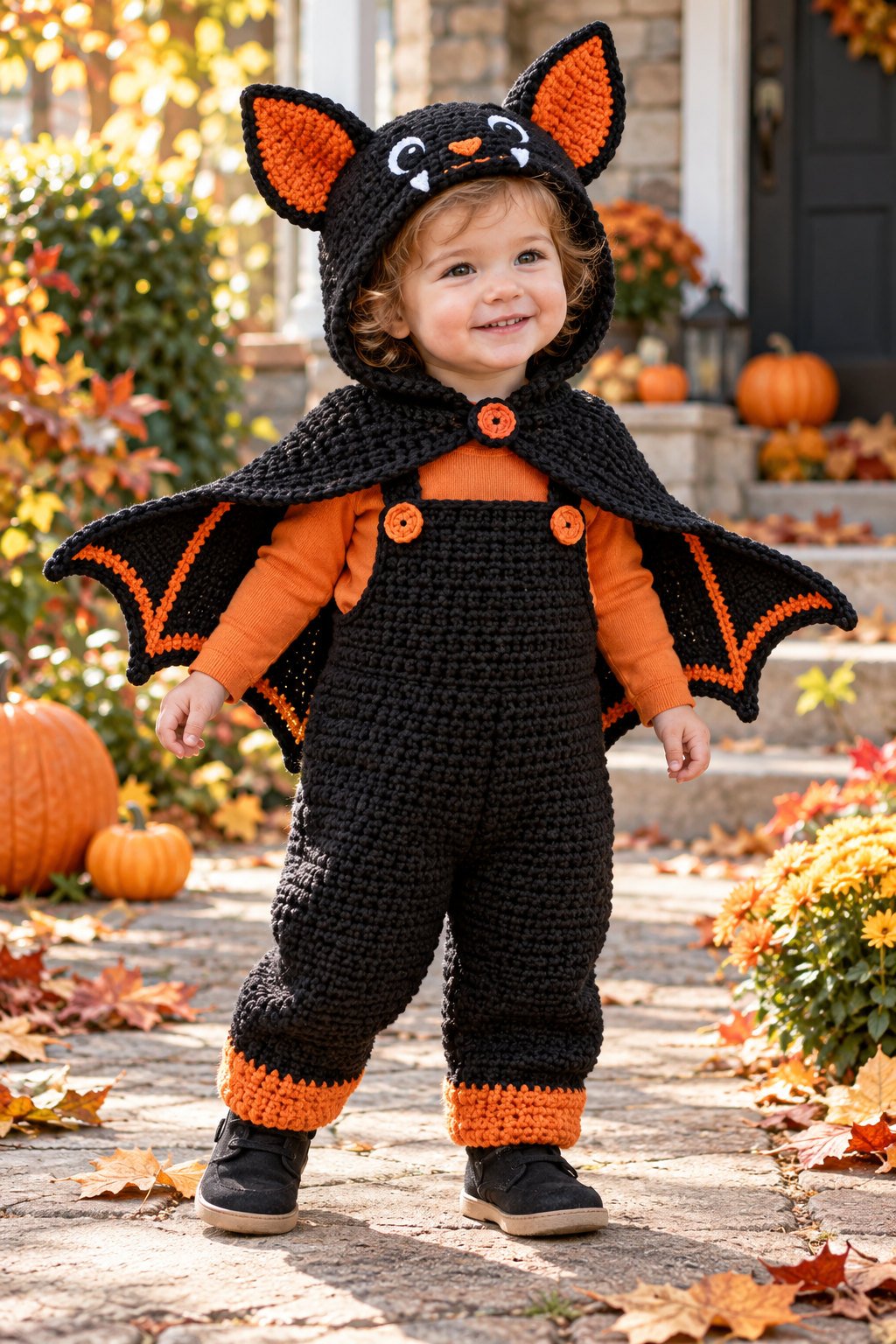
A black-and-orange toddler bat costume can be a memorable handmade Halloween look, with a hood, winged cape, and simple outfit details carrying the theme. Use the photo as inspiration, then fit each piece to the child and choose secure, comfortable finishing details. Because the reference does not include exact pattern specifications, treat this as a flexible design guide rather than a tested size-specific pattern.


1 thought on “Toddler Bat Costume Crochet Pattern, Halloween Bat Outfit”